
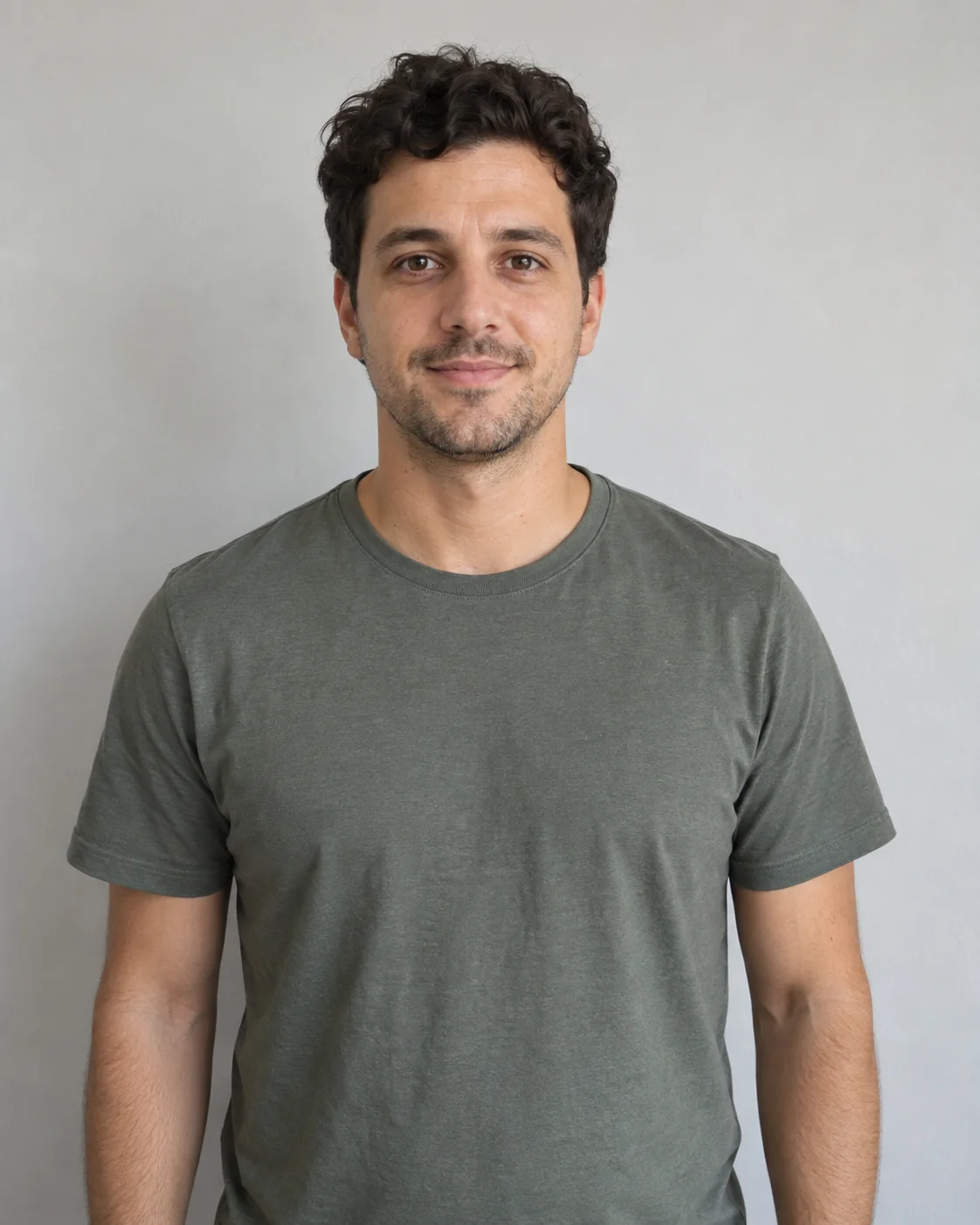
Good starting point
- One adult, standing, with head and shoes in frame
- A sharp face without sunglasses or hands covering it
- Arms distinguishable from the torso, with natural proportions
- Even light and the clothing you want the dancer to wear
One photo. The red-stage routine. Your 15-second dance.Your look, the red stage, the Tecktonik arm routine. Upload one photo to replace the lead dancer in this 15-second party clip.
Photo-based remakes place a new performer into a recognizable Tecktonik routine. This page uses the red-lit raised-stage version, not the separate DJ-booth party clip.
One dancer performs above a crowd under strings of lights. The movement is led by crossing forearms, sweeps near the face, points, and overhead wraps. Your photo supplies the replacement person; the clip supplies those movements and the handheld camera.
View the red-stage reference sourceThe source reference identifies the routine. It is not our generated result; How to shows the actual input photo alongside this tool's generated example.
Cheba Man, Tecktonik, and Love Is Gonna Save Us appear around related edits. Preview the scene before choosing a template.
The red stage, string lights, and arm-heavy routine make this version recognizable. A Spinnin' Records repost is one public source for the performance; it is not proof of the earliest upload.
See the performance repostPublic template pages show photo-based edits of this stage and a different DJ-party scene. Those are different references, even when they use the same dance or song keywords.
Compare the red-stage templateThis tool uses the displayed 15-second stage excerpt and one uploaded person. It does not swap the audience or offer a second party location.
Use a clear photo, inspect the routine, and check the complete result.
Choose one adult in a clear, preferably full-body photo. Keep the face, arms, clothing, and shoes visible; those details define your replacement performer.
The red-stage clip is 15 seconds. Select 480P or 720P and review the total credits on the generation button.
Review the face after arm sweeps and turns, and check the hands and feet. Download the finished video or return to it in History.
The routine uses the whole body. A tight portrait leaves more clothing, arm, and leg detail for the model to invent.
A single upload puts the focus on the stage dancer.
The person on the raised stage is the replacement target. The audience and the people holding phones are not additional character slots.
The prompt requests identity, hairstyle, proportions, and visible clothing from your photo, rather than copying the source dancer's striped shirt or sunglasses.
The built-in video provides the arm sequence and camera movement. You do not have to describe every wrap or point in a custom prompt.
The complete preview shows how the selected clip moves. Check your result through face-covering gestures and the low stance near the end.
One fixed 15-second clip, with the total based on your selected resolution.
480P uses 225 credits; 720P uses 375 credits. The generation button shows the current total before submission.
The cash cost depends on your plan or credit pack. A new generation is a separate attempt and uses additional credits.
Generation uses Wan3 Prime through fal. Technical failures return generation credits automatically. A completed result with visual imperfections is not a technical failure. View the model documentation
Compare the actual reference and workflow, not just a shared trend name. A DJ-party edit is not this red-stage routine.
Keep the same account and explore another motion template.
The red-lit raised-stage routine shown on this page: one dancer above a filming crowd, with string lights overhead. It does not use the separate DJ-booth clip with a hedge and an orange-red top.
One photo of one adult. This version only replaces the stage dancer. Group photos, audience replacement, and pet variants are not supported by this template.
That is what the prompt requests. A full-body photo gives the model more information than a selfie. Unseen clothing, footwear, and rear views must still be inferred, and details can change during fast motion.
That song name is used around more than one dance clip. This page specifically uses the red-stage version. Tecktonik describes the arm-led dance style; the displayed reference identifies the exact routine we use.
15 seconds in vertical 9:16. Choose 480P for 225 credits or 720P for 375 credits. Check the generation button for the current total before submitting.
The reference guides the choreography and timing, but generation is not a frame-by-frame guarantee. Fast wraps across the face, crossed arms, low light, and partial obstruction can cause identity or limb errors. Review the complete output.
The finished video uses the selected reference's audio; display previews are silent. No voice cloning is involved. Generation does not grant music or footage rights for advertising or other commercial uses.
Technical failures return generation credits automatically. A completed video with imperfect movement or likeness is not a technical failure. Another attempt uses additional credits.
No. This template includes the fixed 15-second reference and character-replacement instructions. It does not accept different scenes, new choreography, or custom camera directions.
No. This is an independent AI character-replacement tool, not an official product or endorsement from the performer or music rights holders. Review your result and label realistic AI edits when sharing.